
This was not a pitch. It was a multi-stakeholder approval campaign.
R800 million development. Three stakeholder groups. Full approval secured.
Branding
Presentation Design
Sales Copywriting
Ebotse Expansion
This was not a pitch. It was a multi-stakeholder approval campaign.
An R800 million expansion. Three distinct stakeholder groups - each with the power to end the project.
Ebotse Expansion
Overview
Gavin is the kind of founder who makes things happen because he refuses to accept that they can't be. Ebotse exists because of that. The vision was his. The relationships were his. The commercial track record — a functioning, successful estate with a community living inside it — was earned, not claimed. When he called us in for a discovery session on the expansion, he was not a founder with a shaky idea looking for validation. He was a founder with a genuinely strong proposal, walking into an approval environment that had changed underneath him since the last time he'd won one. That distinction shaped everything that followed.
The expansion was ambitious by any measure: nature trails and mountain bike routes, retirement homes, sectional title development, a boutique hotel with AirBnB suites, a lifestyle centre, a business centre, a watersports zone, and a wild bird sanctuary. Gavin's instinct in the discovery session was to lead with the family story — the connection to the land, the photographs from before development, the history of what had been built. Then a few slides on what came next. It was the right instinct for the room he had won in before. Ebotse's first chapter was sold on vision and personal conviction, and it worked. The room had changed. The proposal now had to clear a Homeowners Association, and then hundreds of individual homeowners.

Ebotse Expansion
The Challenge
Most pitches face one buyer group with one set of criteria. This one faced three, in sequence, each holding a veto and each evaluating from a completely different position. The HOA weighs governance, precedent and collective risk. Individual homeowners weigh personal financial impact, lifestyle compatibility and delivery confidence. Neither group had asked for this. Both were being invited to endorse something they had not initiated and could not control. Then the components themselves. Nature trails and a bird sanctuary inspire some homeowners and puzzle others. A boutique hotel and short-stay suites excite some and raise immediate questions about privacy, security and estate character for others. Retirement homes touch demographics. Sectional title touches property values directly. Every element that thrilled one group had the capacity to alarm another.
There was a practical constraint on top of the structural one: nothing existed to look at. The blueprints weren't finished. No renderings had been produced. An R800 million development described in bullet points does not inspire confidence in a homeowner — it invites anxiety. In high-stakes approval, what people can see governs what they can believe, and the gap between here is the idea and here is what it will look like had to close before any argument could land. Gavin knew the harder truth better than anyone in the room. He had carried previous sales personally, on relationship and force of conviction. This one was too large, too distributed and too repeated to be carried that way. The weight had to shift from him to something that could work without him present.
Ebotse Expansion
The Solution
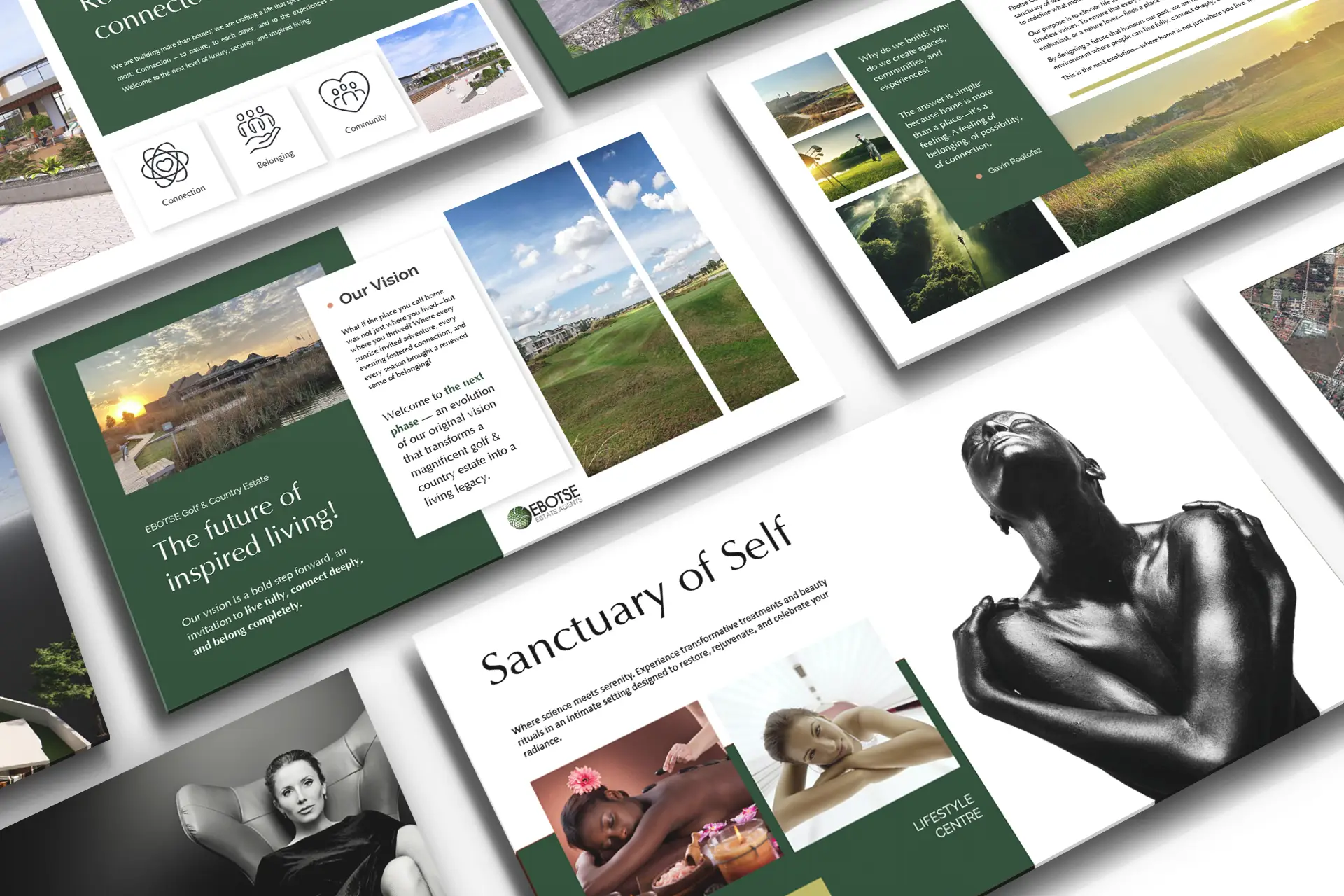
We began where the decision actually sits: with the people holding it. Working with Gavin, we mapped each stakeholder group by power and influence, then built a value proposition canvas for each one. What does this group care about most? What makes them say no immediately? Which objections are predictable, and therefore answerable before they are ever raised? We researched homeowners associations, homeowner decision behaviour, and comparable multi-phase developments across South Africa. What came out of that work reframed the pitch — and Gavin, to his enormous credit, moved on it immediately. From family dream to shared community vision. From one founder's ambition to collective opportunity. From cost to value. From hype to clarity. The story stayed his. The reference point became theirs.
PowerPoint Adobe Photoshop Adobe Illustrator MidJourney
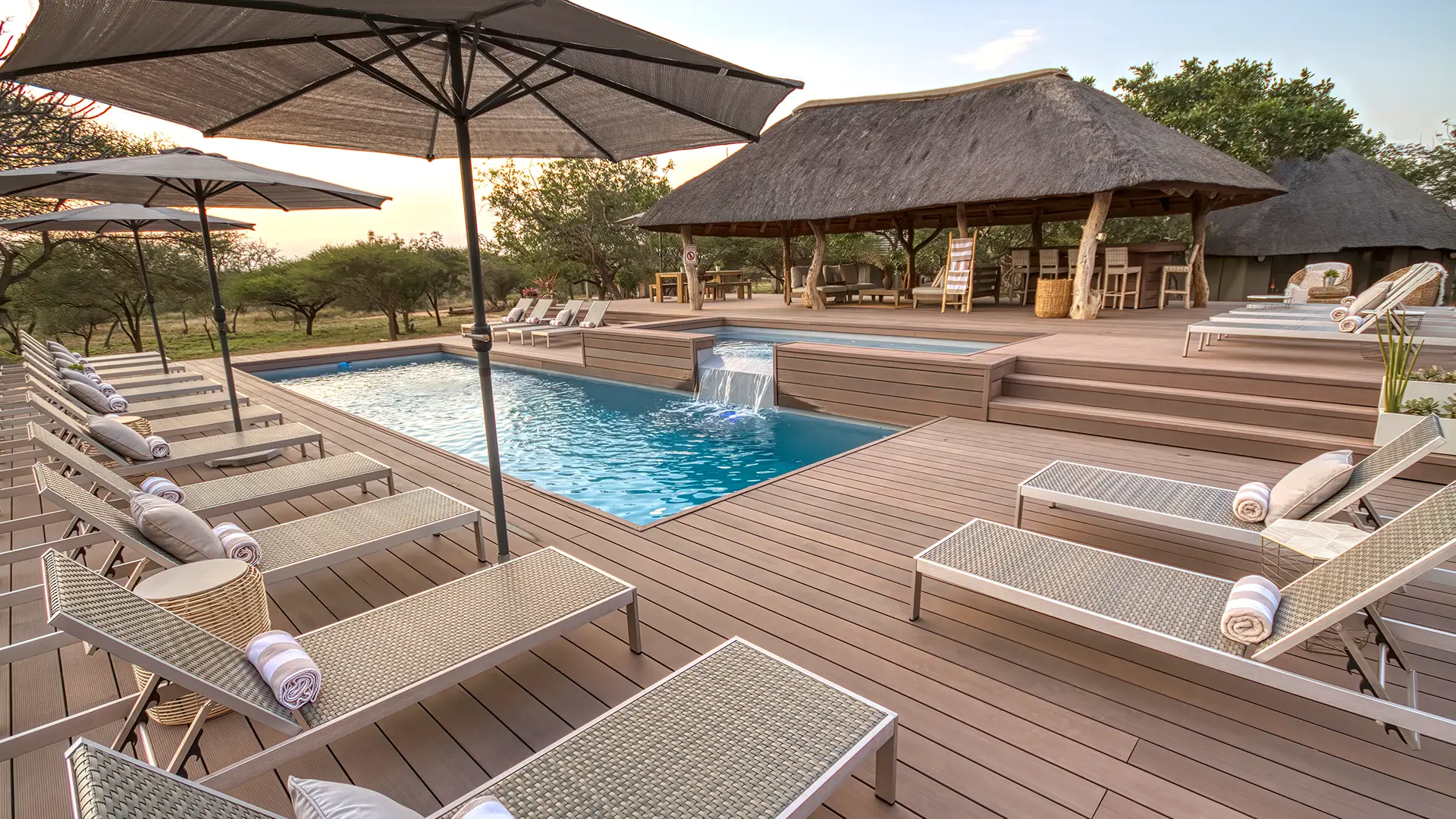
From there, a narrative spine — one coherent argument capable of serving three different audiences without contradicting itself. Shared ground first, then the commercial and lifestyle opportunity, then evidence of delivery capability, then the hardest objections met head-on, then a clear ask. Strategic storytelling and sales-infused copywriting fleshed it out. Where renderings didn't exist, AI-generated imagery made the vision visible — not as a substitute for architecture, but to let people picture a bird sanctuary, a watersports zone, a lifestyle centre as something real rather than abstract. Design came last and carried significant weight: premium positioning, delivery confidence, community investment. Six weeks. Focus group pitches along the way told us exactly where the argument was landing and where it needed reinforcing. Every round sharpened it.
Ebotse Expansion
Performance Results
The first person the presentation had to convince was Gavin — and that was the right standard. He knows this project more intimately than anyone alive. When he reached the point of genuine confidence in it, of recognising precisely how it would help him make the thing real, the argument was working. The HOA session delivered something he described as unlike anything he had experienced in that forum. Not procedural approval. Active endorsement — "love this," "absolutely brilliant presentation," "we fully support and endorse this." An association that is seldom cohesive by design aligned behind the proposal. They did more than clear it for homeowner consideration. They advocated for it. The gatekeeper became the champion, which changed the entire dynamic of the pitch that followed.
Ebotse Expansion
Final thoughts
Gavin Roelofsz had already done the hard part. He had identified the opportunity, designed the development, assembled the relationships, and built the credibility. The vision was real. The plan was sound. The potential was significant. What he hadn’t done yet was build the argument that would make other people see it the way he saw it. This is the challenge every founder faces when the sale stops being between two people and starts being between one person and a community. Personal conviction travels through relationships. It does not automatically travel through rooms full of people who have their own concerns, their own questions, and their own reasons to say no. An R800 million development does not get approved because the founder believes in it. It gets approved because every stakeholder group — in the right sequence, with the right argument, at the right level of emotional and commercial clarity — arrives at the same conclusion independently. That is not selling. That is architecture. Narrative architecture. The deliberate design of a story that travels across stakeholder groups, answers the questions each one carries, and converts each group from evaluator to advocate — so that by the time the final audience convenes, the decision has already been shaped by everyone who came before them. If you have a vision that requires more than one room to approve — a development, a restructure, an expansion, a transformation — the question is not whether your idea is good enough. The question is whether your argument is built to travel.
Ebotse Expansion
Credits
Gavin Roelofsz
Gin Roelofsz
Daryn Basson
Ebotse Estate Agents
Ebotse Estate Agents
Presentation Specialist

Previous Project
Next Project


This was not a pitch. It was a multi-stakeholder approval campaign.
R800 million development. Three stakeholder groups. Full approval secured.
Branding
Presentation Design
Sales Copywriting
Ebotse Expansion
This was not a pitch. It was a multi-stakeholder approval campaign.
An R800 million expansion. Three distinct stakeholder groups - each with the power to end the project.
Ebotse Expansion
Overview
Gavin is the kind of founder who makes things happen because he refuses to accept that they can't be. Ebotse exists because of that. The vision was his. The relationships were his. The commercial track record — a functioning, successful estate with a community living inside it — was earned, not claimed. When he called us in for a discovery session on the expansion, he was not a founder with a shaky idea looking for validation. He was a founder with a genuinely strong proposal, walking into an approval environment that had changed underneath him since the last time he'd won one. That distinction shaped everything that followed.
The expansion was ambitious by any measure: nature trails and mountain bike routes, retirement homes, sectional title development, a boutique hotel with AirBnB suites, a lifestyle centre, a business centre, a watersports zone, and a wild bird sanctuary. Gavin's instinct in the discovery session was to lead with the family story — the connection to the land, the photographs from before development, the history of what had been built. Then a few slides on what came next. It was the right instinct for the room he had won in before. Ebotse's first chapter was sold on vision and personal conviction, and it worked. The room had changed. The proposal now had to clear a Homeowners Association, and then hundreds of individual homeowners.
Ebotse Expansion
The Challenge
Most pitches face one buyer group with one set of criteria. This one faced three, in sequence, each holding a veto and each evaluating from a completely different position. The HOA weighs governance, precedent and collective risk. Individual homeowners weigh personal financial impact, lifestyle compatibility and delivery confidence. Neither group had asked for this. Both were being invited to endorse something they had not initiated and could not control. Then the components themselves. Nature trails and a bird sanctuary inspire some homeowners and puzzle others. A boutique hotel and short-stay suites excite some and raise immediate questions about privacy, security and estate character for others. Retirement homes touch demographics. Sectional title touches property values directly. Every element that thrilled one group had the capacity to alarm another.
There was a practical constraint on top of the structural one: nothing existed to look at. The blueprints weren't finished. No renderings had been produced. An R800 million development described in bullet points does not inspire confidence in a homeowner — it invites anxiety. In high-stakes approval, what people can see governs what they can believe, and the gap between here is the idea and here is what it will look like had to close before any argument could land. Gavin knew the harder truth better than anyone in the room. He had carried previous sales personally, on relationship and force of conviction. This one was too large, too distributed and too repeated to be carried that way. The weight had to shift from him to something that could work without him present.
Ebotse Expansion
The Solution
We began where the decision actually sits: with the people holding it. Working with Gavin, we mapped each stakeholder group by power and influence, then built a value proposition canvas for each one. What does this group care about most? What makes them say no immediately? Which objections are predictable, and therefore answerable before they are ever raised? We researched homeowners associations, homeowner decision behaviour, and comparable multi-phase developments across South Africa. What came out of that work reframed the pitch — and Gavin, to his enormous credit, moved on it immediately. From family dream to shared community vision. From one founder's ambition to collective opportunity. From cost to value. From hype to clarity. The story stayed his. The reference point became theirs.
PowerPoint Adobe Photoshop Adobe Illustrator MidJourney
From there, a narrative spine — one coherent argument capable of serving three different audiences without contradicting itself. Shared ground first, then the commercial and lifestyle opportunity, then evidence of delivery capability, then the hardest objections met head-on, then a clear ask. Strategic storytelling and sales-infused copywriting fleshed it out. Where renderings didn't exist, AI-generated imagery made the vision visible — not as a substitute for architecture, but to let people picture a bird sanctuary, a watersports zone, a lifestyle centre as something real rather than abstract. Design came last and carried significant weight: premium positioning, delivery confidence, community investment. Six weeks. Focus group pitches along the way told us exactly where the argument was landing and where it needed reinforcing. Every round sharpened it.
Ebotse Expansion
Performance Results
The first person the presentation had to convince was Gavin — and that was the right standard. He knows this project more intimately than anyone alive. When he reached the point of genuine confidence in it, of recognising precisely how it would help him make the thing real, the argument was working. The HOA session delivered something he described as unlike anything he had experienced in that forum. Not procedural approval. Active endorsement — "love this," "absolutely brilliant presentation," "we fully support and endorse this." An association that is seldom cohesive by design aligned behind the proposal. They did more than clear it for homeowner consideration. They advocated for it. The gatekeeper became the champion, which changed the entire dynamic of the pitch that followed.
Ebotse Expansion
Final thoughts
Gavin Roelofsz had already done the hard part. He had identified the opportunity, designed the development, assembled the relationships, and built the credibility. The vision was real. The plan was sound. The potential was significant. What he hadn’t done yet was build the argument that would make other people see it the way he saw it. This is the challenge every founder faces when the sale stops being between two people and starts being between one person and a community. Personal conviction travels through relationships. It does not automatically travel through rooms full of people who have their own concerns, their own questions, and their own reasons to say no. An R800 million development does not get approved because the founder believes in it. It gets approved because every stakeholder group — in the right sequence, with the right argument, at the right level of emotional and commercial clarity — arrives at the same conclusion independently. That is not selling. That is architecture. Narrative architecture. The deliberate design of a story that travels across stakeholder groups, answers the questions each one carries, and converts each group from evaluator to advocate — so that by the time the final audience convenes, the decision has already been shaped by everyone who came before them. If you have a vision that requires more than one room to approve — a development, a restructure, an expansion, a transformation — the question is not whether your idea is good enough. The question is whether your argument is built to travel.
Ebotse Expansion
Gavin Roelofsz
Gin Roelofsz
Daryn Basson
Ebotse Estate Agents
Ebotse Estate Agents
Presentation Specialist
Previous Project
Next Project
This was not a pitch. It was a multi-stakeholder approval campaign.
R800 million development. Three stakeholder groups. Full approval secured.
Branding
Presentation Design
Sales Copywriting
Ebotse Expansion
This was not a pitch. It was a multi-stakeholder approval campaign.
An R800 million expansion. Three distinct stakeholder groups - each with the power to end the project.
Ebotse Expansion
Overview
Gavin is the kind of founder who makes things happen because he refuses to accept that they can't be. Ebotse exists because of that. The vision was his. The relationships were his. The commercial track record — a functioning, successful estate with a community living inside it — was earned, not claimed. When he called us in for a discovery session on the expansion, he was not a founder with a shaky idea looking for validation. He was a founder with a genuinely strong proposal, walking into an approval environment that had changed underneath him since the last time he'd won one. That distinction shaped everything that followed.
The expansion was ambitious by any measure: nature trails and mountain bike routes, retirement homes, sectional title development, a boutique hotel with AirBnB suites, a lifestyle centre, a business centre, a watersports zone, and a wild bird sanctuary. Gavin's instinct in the discovery session was to lead with the family story — the connection to the land, the photographs from before development, the history of what had been built. Then a few slides on what came next. It was the right instinct for the room he had won in before. Ebotse's first chapter was sold on vision and personal conviction, and it worked. The room had changed. The proposal now had to clear a Homeowners Association, and then hundreds of individual homeowners.
Ebotse Expansion
The Challenge
Most pitches face one buyer group with one set of criteria. This one faced three, in sequence, each holding a veto and each evaluating from a completely different position. The HOA weighs governance, precedent and collective risk. Individual homeowners weigh personal financial impact, lifestyle compatibility and delivery confidence. Neither group had asked for this. Both were being invited to endorse something they had not initiated and could not control. Then the components themselves. Nature trails and a bird sanctuary inspire some homeowners and puzzle others. A boutique hotel and short-stay suites excite some and raise immediate questions about privacy, security and estate character for others. Retirement homes touch demographics. Sectional title touches property values directly. Every element that thrilled one group had the capacity to alarm another.
There was a practical constraint on top of the structural one: nothing existed to look at. The blueprints weren't finished. No renderings had been produced. An R800 million development described in bullet points does not inspire confidence in a homeowner — it invites anxiety. In high-stakes approval, what people can see governs what they can believe, and the gap between here is the idea and here is what it will look like had to close before any argument could land. Gavin knew the harder truth better than anyone in the room. He had carried previous sales personally, on relationship and force of conviction. This one was too large, too distributed and too repeated to be carried that way. The weight had to shift from him to something that could work without him present.
Ebotse Expansion
The Solution
We began where the decision actually sits: with the people holding it. Working with Gavin, we mapped each stakeholder group by power and influence, then built a value proposition canvas for each one. What does this group care about most? What makes them say no immediately? Which objections are predictable, and therefore answerable before they are ever raised? We researched homeowners associations, homeowner decision behaviour, and comparable multi-phase developments across South Africa. What came out of that work reframed the pitch — and Gavin, to his enormous credit, moved on it immediately. From family dream to shared community vision. From one founder's ambition to collective opportunity. From cost to value. From hype to clarity. The story stayed his. The reference point became theirs.
PowerPoint Adobe Photoshop Adobe Illustrator MidJourney
From there, a narrative spine — one coherent argument capable of serving three different audiences without contradicting itself. Shared ground first, then the commercial and lifestyle opportunity, then evidence of delivery capability, then the hardest objections met head-on, then a clear ask. Strategic storytelling and sales-infused copywriting fleshed it out. Where renderings didn't exist, AI-generated imagery made the vision visible — not as a substitute for architecture, but to let people picture a bird sanctuary, a watersports zone, a lifestyle centre as something real rather than abstract. Design came last and carried significant weight: premium positioning, delivery confidence, community investment. Six weeks. Focus group pitches along the way told us exactly where the argument was landing and where it needed reinforcing. Every round sharpened it.
Ebotse Expansion
Performance Results
The first person the presentation had to convince was Gavin — and that was the right standard. He knows this project more intimately than anyone alive. When he reached the point of genuine confidence in it, of recognising precisely how it would help him make the thing real, the argument was working. The HOA session delivered something he described as unlike anything he had experienced in that forum. Not procedural approval. Active endorsement — "love this," "absolutely brilliant presentation," "we fully support and endorse this." An association that is seldom cohesive by design aligned behind the proposal. They did more than clear it for homeowner consideration. They advocated for it. The gatekeeper became the champion, which changed the entire dynamic of the pitch that followed.
Ebotse Expansion
Final thoughts
Gavin Roelofsz had already done the hard part. He had identified the opportunity, designed the development, assembled the relationships, and built the credibility. The vision was real. The plan was sound. The potential was significant. What he hadn’t done yet was build the argument that would make other people see it the way he saw it. This is the challenge every founder faces when the sale stops being between two people and starts being between one person and a community. Personal conviction travels through relationships. It does not automatically travel through rooms full of people who have their own concerns, their own questions, and their own reasons to say no. An R800 million development does not get approved because the founder believes in it. It gets approved because every stakeholder group — in the right sequence, with the right argument, at the right level of emotional and commercial clarity — arrives at the same conclusion independently. That is not selling. That is architecture. Narrative architecture. The deliberate design of a story that travels across stakeholder groups, answers the questions each one carries, and converts each group from evaluator to advocate — so that by the time the final audience convenes, the decision has already been shaped by everyone who came before them. If you have a vision that requires more than one room to approve — a development, a restructure, an expansion, a transformation — the question is not whether your idea is good enough. The question is whether your argument is built to travel.
Ebotse Expansion
Gavin Roelofsz
Gin Roelofsz
Daryn Basson
Ebotse Estate Agents
Ebotse Estate Agents
Presentation Specialist
Previous Project

Next Project