
NowaTech
R250/day ad budget. 44 installers. 8 distributors. 40+ consumer leads per week.
Web Design
Social Media Design
Sales Campaign
Sales Copywriting

NowaTech Launch
NowaTech
No installers. No distributors. No case studies. No reviews. No brand presence. No social proof. No industry certifications. And a client who needed all of it built quietly and delicately.
NowaTech Launch
Overview
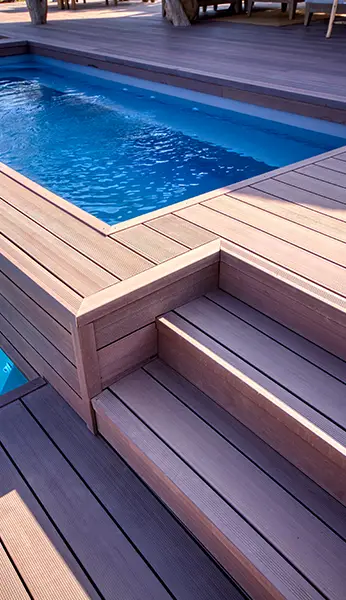
NowaTech had the hardest part already solved. A genuinely good product with a genuinely good story behind it — recycled plastic transformed into durable, attractive decking, alongside traffic poles, garden poles, pergolas and cladding. Manufacturing capability that worked. A supply relationship with a national hardware and home chain that had proven the product could hold its own on a retail shelf. That is not a company with a problem. That is a company with an asset. What they wanted was to stop being solely a supplier inside someone else's brand, and start being a brand in their own right — reaching consumers directly, and reaching them through installers who could specify and fit the product properly.
The ambition was specific, and it was sound. Two routes to market. Direct to the consumer choosing decking for a home. And through a vetted national network of installers — the people architects, pool builders and homeowners actually listen to at the point of decision. For a manufacturer with a superior product, that second channel is the one that compounds. An installer who trusts your product recommends it a hundred times. A consumer who buys it once, buys it once. The strategy was right. The commercial infrastructure to execute it did not exist yet.

NowaTech Launch
The Challenge
The gap was not small. There were no vetted installers to work with, and no in-house installation team to fall back on. There were no case studies, no installation photographs, no customer reviews, no brand footprint in South Africa of any kind. No distributors. No partnerships to leverage. And for the specifier market — architects, pool builders, developers — there was no industry-standard testing to hand over. That audience does not buy on enthusiasm. They buy on documentation. Every buyer group NowaTech needed had a legitimate reason to ask prove it, and the business had nothing on the shelf to hand them.
Then the constraint that shaped everything. NowaTech did not want to make a splash. The factory location stayed private. The production process stayed private. Test results the directors considered commercially sensitive stayed out of public view. Existing partnerships were confidential and could not be disturbed. This was not caution for its own sake. It was a manufacturer protecting real intellectual property and real relationships from competitors who would have been delighted to see any of it. But it created a genuine paradox. The brand needed to be visible enough to be chosen, and invisible enough to stay protected. Almost every conventional launch tactic — factory tours, process films, published test data, partner logos — was off the table before we started.
NowaTech Launch
The Solution
We started with the buyers, because in a launch with no proof, buyer understanding is the proof. We mapped what the brand genuinely needed to launch and grow, then built selection criteria and tier structures for the installer network. Then we mapped the installer as a buyer. What do they need? What would make them switch from a supplier they already trust? What earns loyalty rather than a one-off order? Competitive analysis followed — local first, then global. That work surfaced the real competitive picture: Chinese imports dominated, moving through established distribution networks NowaTech would have to both replicate and compete against. So we mapped the distributor as a buyer too. Pricing structures. Incentive tiers. What would make them back a local manufacturer over a trusted import.
Technology PowerPoint Adobe Photoshop Adobe Premiere Pro Adobe After Effects Wordpress / Elementor Adobe Illustrator Sales Retainer

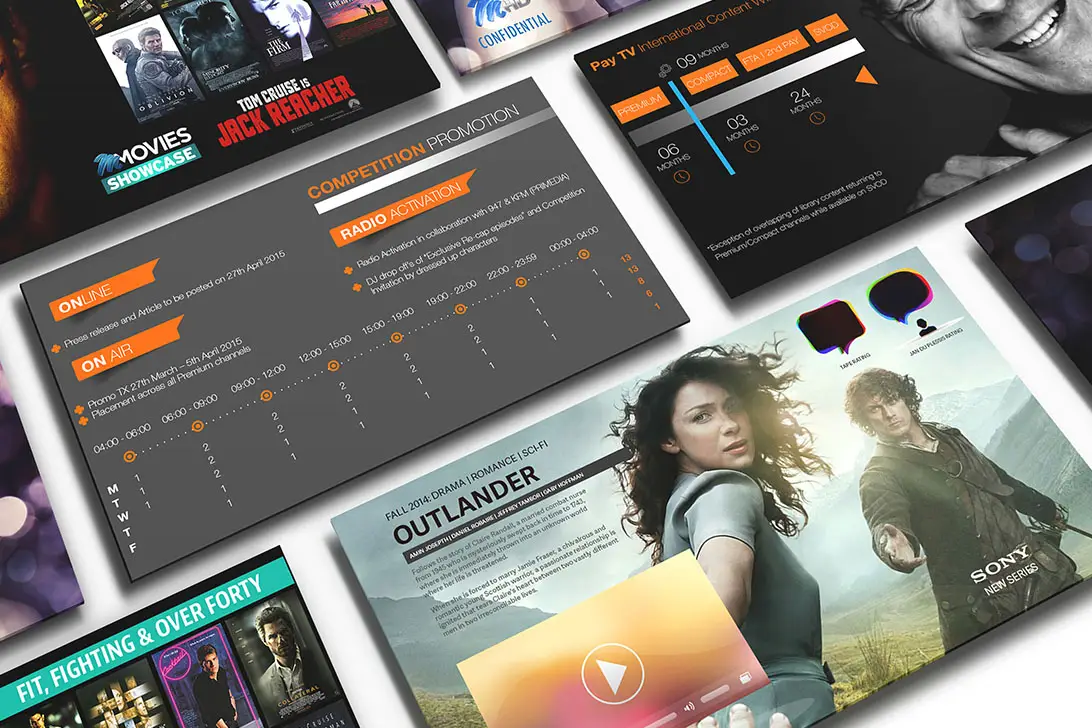
The proof problem had a quiet answer: it already existed. Installers and suppliers had been fitting this product for years. We went back to them, gathered installation photographs, collected reviews, and recruited them into the network at the same time. NowaTech had earned that goodwill long before we arrived. It had simply never been collected. From there, in sequence: a deliberately conservative website built to the minimum credible standard for each buyer group. Social assets inside the constraints. Sales decks in desktop and mobile. Installer recruitment campaigns. Expo and roadshow assets so the newly appointed sales representative could open relationships in person. Co-branding for network members. Then demand campaigns aimed at the three consumer segments the research had identified. Then launch — and continuous optimisation from live data.
NowaTech Launch
Performance Results
The channel numbers moved first, and they moved hard. Installer lead generation went from one lead per month to twenty per week — converting into a vetted national network of 44 installers under partnership agreement. Distributor leads went from one per quarter to ten per week, converting into 8 distributors operating nationwide. That is the part worth sitting with. NowaTech went from having no route to market beyond a single supply relationship to having a national commercial network of 52 partners, built from a standing start, in a market dominated by imports. The product had always been good enough to earn that. It had never been positioned to ask for it.
NowaTech Launch
Final thoughts
The instinct, when a brand has no footprint, is to go and build awareness. Get known. Make noise. NowaTech could not make noise even if it had wanted to — and that turned out to be an advantage rather than a handicap. Because awareness was never the thing that was missing. Action was. Every asset in this system was built backwards from a specific decision: get this installer to apply, get this distributor to request a conversation, get this homeowner to book a quote. Not let people know we exist. That is the whole discipline, and NowaTech proves it twice over. It proves that assets built for a decision outperform assets built for attention. And it proves that a business with real confidentiality obligations can still build a national commercial network — without ever putting the things that matter most at risk. The directors had built something worth choosing. The work was making it easy to choose.
NowaTech Launch
Credits
Daryn Basson
Ghalib Janmohammed
Sales + Marketing Specialist
Director

Next Project


NowaTech
R250/day ad budget. 44 installers. 8 distributors. 40+ consumer leads per week.
Web Design
Social Media Design
Sales Campaign
Sales Copywriting
NowaTech Launch
NowaTech
No installers. No distributors. No case studies. No reviews. No brand presence. No social proof. No industry certifications. And a client who needed all of it built quietly and delicately.
NowaTech Launch
Overview
NowaTech had the hardest part already solved. A genuinely good product with a genuinely good story behind it — recycled plastic transformed into durable, attractive decking, alongside traffic poles, garden poles, pergolas and cladding. Manufacturing capability that worked. A supply relationship with a national hardware and home chain that had proven the product could hold its own on a retail shelf. That is not a company with a problem. That is a company with an asset. What they wanted was to stop being solely a supplier inside someone else's brand, and start being a brand in their own right — reaching consumers directly, and reaching them through installers who could specify and fit the product properly.
The ambition was specific, and it was sound. Two routes to market. Direct to the consumer choosing decking for a home. And through a vetted national network of installers — the people architects, pool builders and homeowners actually listen to at the point of decision. For a manufacturer with a superior product, that second channel is the one that compounds. An installer who trusts your product recommends it a hundred times. A consumer who buys it once, buys it once. The strategy was right. The commercial infrastructure to execute it did not exist yet.
NowaTech Launch
The Challenge
The gap was not small. There were no vetted installers to work with, and no in-house installation team to fall back on. There were no case studies, no installation photographs, no customer reviews, no brand footprint in South Africa of any kind. No distributors. No partnerships to leverage. And for the specifier market — architects, pool builders, developers — there was no industry-standard testing to hand over. That audience does not buy on enthusiasm. They buy on documentation. Every buyer group NowaTech needed had a legitimate reason to ask prove it, and the business had nothing on the shelf to hand them.
Then the constraint that shaped everything. NowaTech did not want to make a splash. The factory location stayed private. The production process stayed private. Test results the directors considered commercially sensitive stayed out of public view. Existing partnerships were confidential and could not be disturbed. This was not caution for its own sake. It was a manufacturer protecting real intellectual property and real relationships from competitors who would have been delighted to see any of it. But it created a genuine paradox. The brand needed to be visible enough to be chosen, and invisible enough to stay protected. Almost every conventional launch tactic — factory tours, process films, published test data, partner logos — was off the table before we started.
NowaTech Launch
The Solution
We started with the buyers, because in a launch with no proof, buyer understanding is the proof. We mapped what the brand genuinely needed to launch and grow, then built selection criteria and tier structures for the installer network. Then we mapped the installer as a buyer. What do they need? What would make them switch from a supplier they already trust? What earns loyalty rather than a one-off order? Competitive analysis followed — local first, then global. That work surfaced the real competitive picture: Chinese imports dominated, moving through established distribution networks NowaTech would have to both replicate and compete against. So we mapped the distributor as a buyer too. Pricing structures. Incentive tiers. What would make them back a local manufacturer over a trusted import.
Technology PowerPoint Adobe Photoshop Adobe Premiere Pro Adobe After Effects Wordpress / Elementor Adobe Illustrator Sales Retainer
The proof problem had a quiet answer: it already existed. Installers and suppliers had been fitting this product for years. We went back to them, gathered installation photographs, collected reviews, and recruited them into the network at the same time. NowaTech had earned that goodwill long before we arrived. It had simply never been collected. From there, in sequence: a deliberately conservative website built to the minimum credible standard for each buyer group. Social assets inside the constraints. Sales decks in desktop and mobile. Installer recruitment campaigns. Expo and roadshow assets so the newly appointed sales representative could open relationships in person. Co-branding for network members. Then demand campaigns aimed at the three consumer segments the research had identified. Then launch — and continuous optimisation from live data.
NowaTech Launch
Performance Results
The channel numbers moved first, and they moved hard. Installer lead generation went from one lead per month to twenty per week — converting into a vetted national network of 44 installers under partnership agreement. Distributor leads went from one per quarter to ten per week, converting into 8 distributors operating nationwide. That is the part worth sitting with. NowaTech went from having no route to market beyond a single supply relationship to having a national commercial network of 52 partners, built from a standing start, in a market dominated by imports. The product had always been good enough to earn that. It had never been positioned to ask for it.
NowaTech Launch
Final thoughts
The instinct, when a brand has no footprint, is to go and build awareness. Get known. Make noise. NowaTech could not make noise even if it had wanted to — and that turned out to be an advantage rather than a handicap. Because awareness was never the thing that was missing. Action was. Every asset in this system was built backwards from a specific decision: get this installer to apply, get this distributor to request a conversation, get this homeowner to book a quote. Not let people know we exist. That is the whole discipline, and NowaTech proves it twice over. It proves that assets built for a decision outperform assets built for attention. And it proves that a business with real confidentiality obligations can still build a national commercial network — without ever putting the things that matter most at risk. The directors had built something worth choosing. The work was making it easy to choose.
NowaTech Launch
Daryn Basson
Ghalib Janmohammed
Sales + Marketing Specialist
Director
Next Project
NowaTech
R250/day ad budget. 44 installers. 8 distributors. 40+ consumer leads per week.
Web Design
Social Media Design
Sales Campaign
Sales Copywriting
NowaTech Launch
NowaTech
No installers. No distributors. No case studies. No reviews. No brand presence. No social proof. No industry certifications. And a client who needed all of it built quietly and delicately.
NowaTech Launch
Overview
NowaTech had the hardest part already solved. A genuinely good product with a genuinely good story behind it — recycled plastic transformed into durable, attractive decking, alongside traffic poles, garden poles, pergolas and cladding. Manufacturing capability that worked. A supply relationship with a national hardware and home chain that had proven the product could hold its own on a retail shelf. That is not a company with a problem. That is a company with an asset. What they wanted was to stop being solely a supplier inside someone else's brand, and start being a brand in their own right — reaching consumers directly, and reaching them through installers who could specify and fit the product properly.
The ambition was specific, and it was sound. Two routes to market. Direct to the consumer choosing decking for a home. And through a vetted national network of installers — the people architects, pool builders and homeowners actually listen to at the point of decision. For a manufacturer with a superior product, that second channel is the one that compounds. An installer who trusts your product recommends it a hundred times. A consumer who buys it once, buys it once. The strategy was right. The commercial infrastructure to execute it did not exist yet.
NowaTech Launch
The Challenge
The gap was not small. There were no vetted installers to work with, and no in-house installation team to fall back on. There were no case studies, no installation photographs, no customer reviews, no brand footprint in South Africa of any kind. No distributors. No partnerships to leverage. And for the specifier market — architects, pool builders, developers — there was no industry-standard testing to hand over. That audience does not buy on enthusiasm. They buy on documentation. Every buyer group NowaTech needed had a legitimate reason to ask prove it, and the business had nothing on the shelf to hand them.
Then the constraint that shaped everything. NowaTech did not want to make a splash. The factory location stayed private. The production process stayed private. Test results the directors considered commercially sensitive stayed out of public view. Existing partnerships were confidential and could not be disturbed. This was not caution for its own sake. It was a manufacturer protecting real intellectual property and real relationships from competitors who would have been delighted to see any of it. But it created a genuine paradox. The brand needed to be visible enough to be chosen, and invisible enough to stay protected. Almost every conventional launch tactic — factory tours, process films, published test data, partner logos — was off the table before we started.
NowaTech Launch
The Solution
We started with the buyers, because in a launch with no proof, buyer understanding is the proof. We mapped what the brand genuinely needed to launch and grow, then built selection criteria and tier structures for the installer network. Then we mapped the installer as a buyer. What do they need? What would make them switch from a supplier they already trust? What earns loyalty rather than a one-off order? Competitive analysis followed — local first, then global. That work surfaced the real competitive picture: Chinese imports dominated, moving through established distribution networks NowaTech would have to both replicate and compete against. So we mapped the distributor as a buyer too. Pricing structures. Incentive tiers. What would make them back a local manufacturer over a trusted import.
Technology PowerPoint Adobe Photoshop Adobe Premiere Pro Adobe After Effects Wordpress / Elementor Adobe Illustrator Sales Retainer
The proof problem had a quiet answer: it already existed. Installers and suppliers had been fitting this product for years. We went back to them, gathered installation photographs, collected reviews, and recruited them into the network at the same time. NowaTech had earned that goodwill long before we arrived. It had simply never been collected. From there, in sequence: a deliberately conservative website built to the minimum credible standard for each buyer group. Social assets inside the constraints. Sales decks in desktop and mobile. Installer recruitment campaigns. Expo and roadshow assets so the newly appointed sales representative could open relationships in person. Co-branding for network members. Then demand campaigns aimed at the three consumer segments the research had identified. Then launch — and continuous optimisation from live data.
NowaTech Launch
Performance Results
The channel numbers moved first, and they moved hard. Installer lead generation went from one lead per month to twenty per week — converting into a vetted national network of 44 installers under partnership agreement. Distributor leads went from one per quarter to ten per week, converting into 8 distributors operating nationwide. That is the part worth sitting with. NowaTech went from having no route to market beyond a single supply relationship to having a national commercial network of 52 partners, built from a standing start, in a market dominated by imports. The product had always been good enough to earn that. It had never been positioned to ask for it.
NowaTech Launch
Final thoughts
The instinct, when a brand has no footprint, is to go and build awareness. Get known. Make noise. NowaTech could not make noise even if it had wanted to — and that turned out to be an advantage rather than a handicap. Because awareness was never the thing that was missing. Action was. Every asset in this system was built backwards from a specific decision: get this installer to apply, get this distributor to request a conversation, get this homeowner to book a quote. Not let people know we exist. That is the whole discipline, and NowaTech proves it twice over. It proves that assets built for a decision outperform assets built for attention. And it proves that a business with real confidentiality obligations can still build a national commercial network — without ever putting the things that matter most at risk. The directors had built something worth choosing. The work was making it easy to choose.
NowaTech Launch
Daryn Basson
Ghalib Janmohammed
Sales + Marketing Specialist
Director
Next Project


One conversation to find
out if we are the right fit
for YOU
Tell us what you're selling. Who needs to say yes. What's at stake if they don't. We'll tell you exactly what we'd build — and whether we're the right studio to build it.
No obligation. No vague creative brief. A direct conversation about the commercial job your presentation or sales assets needs to do.

One conversation to find
out if we are the right fit
for YOU
Tell us what you're selling. Who needs to say yes. What's at stake if they don't. We'll tell you exactly what we'd build — and whether we're the right studio to build it.
No obligation. No vague creative brief. A direct conversation about the commercial job your presentation or sales assets needs to do.
One conversation to find
out if we are the right fit
for YOU
Tell us what you're selling. Who needs to say yes. What's at stake if they don't. We'll tell you exactly what we'd build — and whether we're the right studio to build it.
No obligation. No vague creative brief. A direct conversation about the commercial job your presentation or sales assets needs to do.